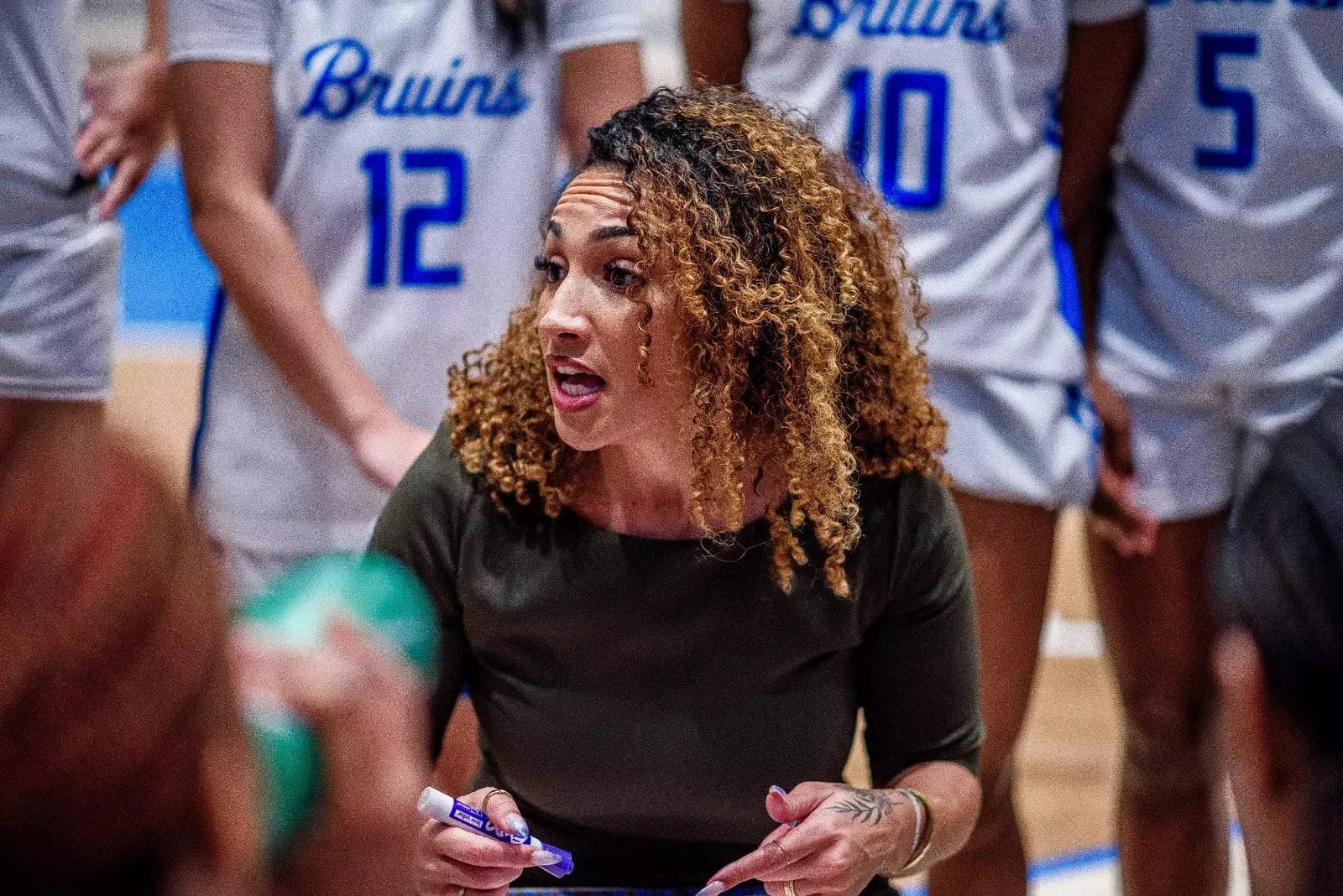
- Salt Lake Community College's published 2026-27 men's basketball roster again pairs Wasatch Front guards with international frontcourt size under head coach Dave Rice.
- Jordan Kohler, SLCC Bruins Men's Basketball connect back to Salt Lake Community College and the wider basketball picture.
- The story is backed by 2 sources and a visible last-verified date.
June 15, 2026
June 15, 2026
4 min / 853 words
2 official links
SLCC Men's Basketball's 2026-27 roster, posted on the program's official site, again leans on the formula that has made Salt Lake Community College a regular NJCAA national-tournament participant: Utah-grown guards, developmental forwards, and international length in the frontcourt.
The published roster lists Dave Rice as head coach, leading a group stacked with Wasatch Front products. Isaiah Beh (Murray), Luke Leatherwood (South Jordan), Ricky Stafford (Orem), Mekhi Martin (Layton), Carter Doleac (Sandy), and Aaron Castagnetto (Provo) give the Bruins a local core that recruits itself to families across Salt Lake and Utah counties. Jordan Kohler, the Lehi forward out of Skyridge High School, carries forward from the prior recruiting cycle.
A roster built on the Wasatch Front
The geographic spread on the roster reads like a Utah high-school map. Highland, North Logan, St. George, Lehi, Murray, South Jordan, Orem, Layton, Sandy, and Provo all sit next to player names. For a program based in Taylorsville, that concentration matters. A junior-college roster full of in-state athletes keeps travel costs low, keeps families in the stands, and keeps the SLCC brand tied to the communities it recruits from.
That local density is the backbone of SLCC's pitch. A late-developing forward from Cache Valley or a sharpshooting guard from Washington County can stay close to home, play a high level of basketball, and use the two-year junior-college window to earn a four-year offer — without leaving the state to do it. Few programs in the region can match that combination of competition level and proximity for Utah families.
International length in the frontcourt
The Bruins pair that local base with size from abroad. The roster lists Samba Barry (Conakry, Guinea) and Muhammed Jobe (Serekunda, Gambia) among the bigs, alongside in-state height like Bryson Bailey (Highland) and Jason Carter (Pocatello, Idaho). The mix of West African frontcourt length and Utah perimeter depth is a recognizable JUCO blueprint: recruit shooting and ball-handling locally, recruit size globally, and let the two develop together across a season.
That blend also shapes how the Bruins play. Length in the paint lets a guard-heavy roster gamble on defense, and a deep rotation of local perimeter players keeps the tempo high. It is a style that has historically traveled well in the conference tournament.
Dave Rice and the Scenic West
Per the official roster, Dave Rice is listed as the program's head coach. SLCC competes in the NJCAA's Scenic West Athletic Conference, the same league that includes Utah's other junior-college basketball programs at Snow College and USU Eastern, plus community-college programs from Colorado, Arizona, Nevada, and Idaho.
The Scenic West is one of the most competitive junior-college basketball leagues in the country. Its tournament champion earns an automatic bid into the NJCAA national tournament, and SLCC has been a regular national-tournament participant over the past two decades, with a steady record of moving players into Division I. The in-state games against Snow and USU Eastern are among the most-attended dates on the conference calendar.
The two-year transfer window
The standard SLCC route runs two seasons on the Taylorsville campus. Freshmen use year one to develop; sophomores use year two to produce the film and numbers that draw four-year offers. Recent Bruins alumni have transferred to in-state Division I programs and to schools across the Mountain West, Big Sky, and West Coast Conference footprints.
For the 2026-27 group, the sophomores and redshirt players carry the highest transfer stakes. The freshmen — the Murray, Lehi, and Provo names near the top of the roster — are in their development year, with the following spring as the realistic transfer-announcement window. The next concrete updates will come from the Scenic West's weekly statistical leaders and SLCC's official game recaps.
Why it matters for Utah families
SLCC sits inside a broader Utah sports ecosystem that runs well beyond the four-year campuses. The same Wasatch Front that feeds the Bruins also fills the adult and youth programs in the Utah community sports hub — the rec leagues, club teams, and local organizations where many of these athletes first learned the game.
For a parent weighing options for a late-blooming high-school senior, the junior-college route is one of the most underrated paths in the state. It keeps the athlete close, keeps the cost manageable, and keeps a Division I outcome on the table.
It also keeps the development local in a way recruiting services rarely capture. A Murray guard or a Sandy forward who needs a year of strength work and minutes can get both at SLCC without uprooting, then re-enter the recruiting market a year older and a level more polished. For families who watched a senior season end without the offer they hoped for, that second window is the entire value of the junior-college model — and SLCC's track record of placing players at the next level is the reason the Bruins keep landing in-state talent year after year.
Key facts:
- Team: SLCC Bruins men's basketball (Taylorsville, Utah)
- Conference: NJCAA Scenic West Athletic Conference (Region 18)
- Head coach (per official roster): Dave Rice
- Roster identity: Wasatch Front guards plus international frontcourt length
- Source: SLCC official 2026-27 men's basketball roster