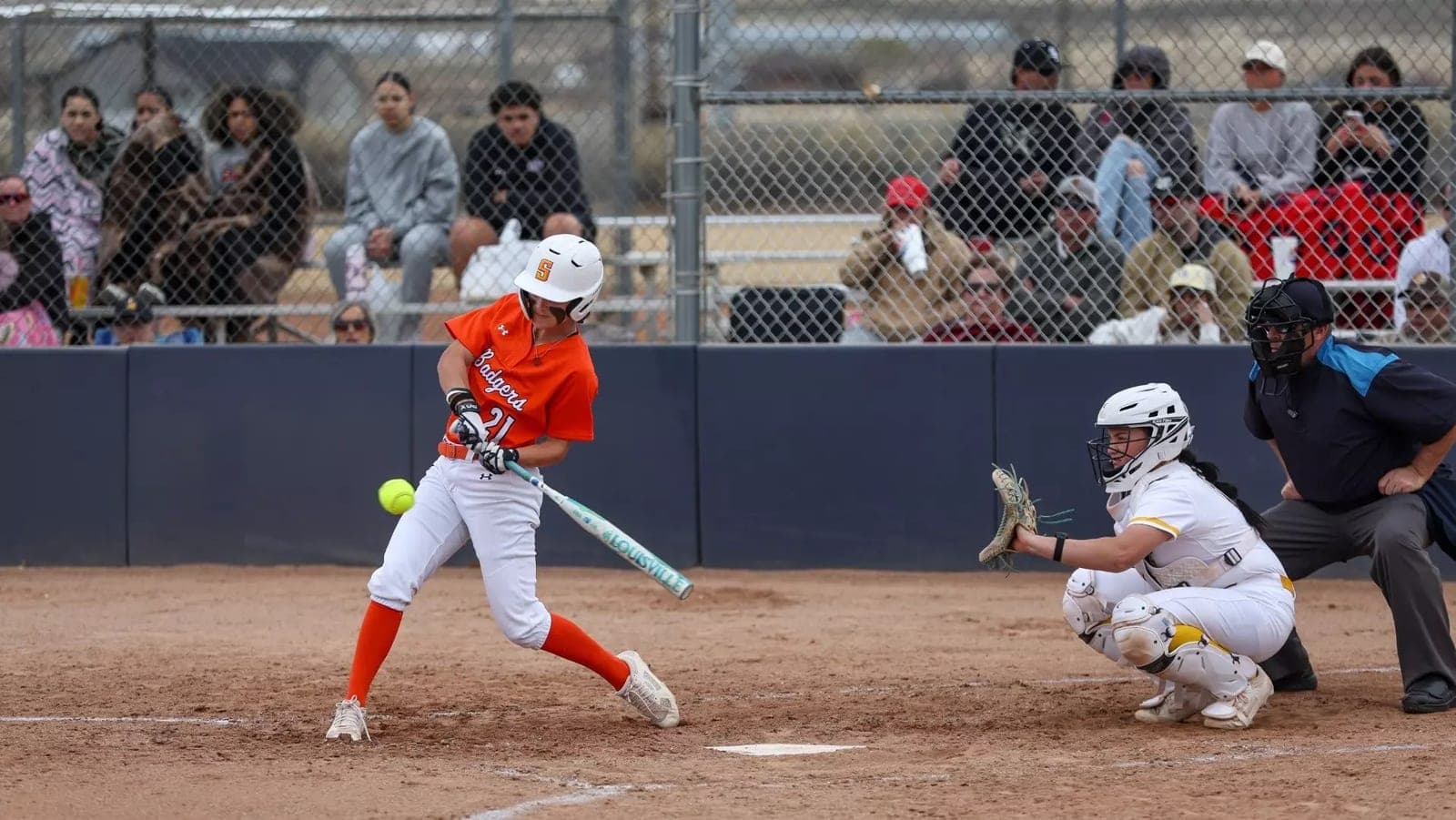
- Snow College, SLCC, and USU Eastern move Utah players into Division I football, basketball, and volleyball rosters every cycle. This is the on-the-record map of how that JUCO-to-D-I pipeline actually works in 2026.
- SLCC Bruins Men's Basketball, Snow College Badgers Football, USU Eastern Eagles Volleyball connect back to Snow College and the wider football picture.
- The story is backed by 9 sources and a visible last-verified date.
April 21, 2026
April 21, 2026
8 min / 1,708 words
9 official links
Utah's junior-college programs do not get the column inches their Power Five neighbors do. They deserve them. Snow College, Salt Lake Community College, and USU Eastern move Utah athletes into FBS football, Division I basketball, and Division I volleyball rosters every year, and the record for how they do it is already public at the schools' own athletics sites. This is the first statewide page that pulls that pipeline together.
All three programs compete in the NJCAA's Scenic West Athletic Conference (SWAC), the NJCAA's Region 18 footprint. That places Ephraim, Taylorsville, and Price on the same competitive map, and it is the reason their alumni lists land at the same Division I destinations.
Snow College's football pipeline is the state's most productive JUCO route
The number that tells the Snow story is on the school's February 4, 2026 release about its National Signing Class: the Badgers brought in 48 players, including six Division I transfers, 11 all-state selections from Utah, and a class that was 39-for-48 in-state by origin. That is a JUCO football class built deliberately around Utah talent and Division I experience.
The Division I movement runs in the other direction just as quickly. Snow's own release on the previous class confirmed that twelve players from one Badgers signing group moved to the four-year level — including Tayson Reid to the University of Utah, TJ Hudson and Gabe Ofisa to SUU, Teni Worthen and Seth Rigtrup to Weber State, Sekope Wallace to UTSA, Martin Alisandro to Tarleton State, Kime Fangupo to San Diego State, Myles Peters to Central Michigan, Colby Williams to South Alabama, Kannin Boswell to Southwest Oklahoma, and Jay Summers into professional Australian Rules football. Read the destination list in aggregate and the pattern is unmistakable: Snow is a genuine annual funnel, and a Utah athlete who needs one more year of development has a clear in-state path.
Head coach Zac Erekson leads the Badgers with a staff that includes defensive coordinator Mark Wilson, offensive-line assistant Trever McFalls, running-backs coach Matt Beecher, and defensive-line coach Stevie Tu'ikolovatu. The staff detail matters because most JUCO coverage treats Utah's NJCAA programs as a single blur. They are not. Snow is a specific shop with a specific roster-building identity, and its staff page is the starting point for any recruiting-service report that wants to source its claims correctly.
The NFL alumni thread gives Snow national reach
The NFL destination is rare for a Utah JUCO program, but Snow has it on record. The school's own April 29, 2024 release confirmed that wide receiver Tejhuan Palmer went to the Arizona Cardinals in the sixth round of the 2024 NFL Draft (pick No. 191) after a UAB career that followed his 2020 Snow season. His Snow line that year — eight games, 32 receptions, 697 yards, 11 touchdowns, plus a four-catch, 131-yard, one-touchdown NJCAA Championship game against Hutchinson — is the kind of in-season production line that makes the pipeline story real rather than inherited.
Nathan Latu, a Salt Lake City native and defensive end, followed the same release as an undrafted free-agent signing with the New Orleans Saints after three years at Oklahoma State. The Big 12 side of his resume (46 tackles, seven sacks, one forced fumble across 31 games) was built on a Snow foundation that included 21 total tackles, 4.5 sacks, and three forced fumbles in just six games during the 2019 season.
Those two names alone — one drafted, one a UDFA contract — give the Snow page what most Utah JUCO coverage lacks: a credible claim that the pipeline reaches the professional level.
Salt Lake Community College's Region 18 basketball record starts with Dave Rice
Salt Lake Community College built its basketball profile the same way. The Bruins are an NJCAA Region 18 program inside the SWAC. They compete for the conference's annual automatic bid to the NJCAA Division I Men's Basketball Championship. And since April 2024, their head-coaching chair has been Dave Rice — a name with one of the most unusual resumes in Utah basketball.
Rice's coaching history is on the record at the Deseret News and The Salt Lake Tribune: he was the UNLV head coach from 2011 to 2016 (a 98-54 record with two NCAA Tournament appearances), a BYU associate head coach under Dave Rose from 2005 to 2011 during a five-NCAA-berth stretch that included the program's 2011 Sweet 16 run, and a member of UNLV's 1990 NCAA Championship team as a player. A JUCO head-coaching chair rarely comes with that kind of resume. It gives SLCC Men's Basketball a hiring signal that the program is being run for Division I-ready development, not JUCO maintenance.
The Region 18 basketball pipeline matters because it is how the state's D-I and mid-major basketball programs fill specific roster holes. Transfers who surface at BYU Men's Basketball, Utah State, or the Utes' bench often spend their first one or two college seasons inside Region 18 before they enter the four-year portal. The Bruins' roster is the source to watch for this cycle's names.
The SLCC roster should be treated as a single watch-list entry until each athlete's class, prior program, and recruiting trail can be verified directly with SLCC Athletics. That is the same discipline that applies to every JUCO roster: publish specifics only when the program has confirmed them on the record.
USU Eastern's volleyball path runs through Price
USU Eastern is the eastern-Utah chapter of the JUCO story and the program that drops off statewide coverage maps the most. It is also the program that put the most specific championship hardware on the table in 2024. Under then-head-coach Danielle Jensen, the Eagles won their first outright SWAC volleyball title, their first SWAC Region 18 Tournament Championship, their first Rocky Mountain District A Championship, and their first automatic berth in the NJCAA Division I National Tournament.
The program's own release confirmed the bracket detail: a five-set victory over No. 19 Snow College in the SWAC final and a sweep of No. 18 Arizona Western for the Rocky Mountain District A crown. Jensen was named 2024 Scenic West Athletic Conference Coach of the Year on the same release cycle. For the 2025-26 season the coaching staff has turned over — Alyssa Fitch is listed as head coach with Kahea Nihipali as her assistant — but the Region 18 championship banner Jensen hung remains the program's definitive modern credential.
The Eagles' volleyball roster is the anchor for tracking this cycle's D-I transfer candidates out of Price. Division I volleyball across Utah — UVU Volleyball, BYU, Utah State, SUU — has pulled NJCAA Region 18 players before. Treating the Eagles as a real team, not a line item, makes those future transfer stories easier to source when they land at a four-year program.
How BYU, Utah, USU, and SUU actually use the pipeline
The Division I side of the story shows up on the four-year sites. Snow's own records confirm that Utah added offensive-line help from Tayson Reid, SUU brought in both Gabe Ofisa and TJ Hudson, Weber State picked up Teni Worthen and Seth Rigtrup, and the program sent Sekope Wallace to UTSA and Kime Fangupo to San Diego State. That is six of the state's four-year football programs, plus three out-of-state destinations, sourced entirely from one Snow signing class release.
Utah State and BYU use the JUCO portal differently. USU has historically pulled more JUCO players at skill positions and in the defensive secondary; BYU's JUCO movement tends to concentrate on the trenches, where older bodies and one extra year of game speed matter most. Region 18 basketball transfers tend to land at mid-major D-I stops — Weber State, SUU, Utah Tech — more often than at BYU, where national-level recruiting fills most of the rotation. That split explains why the Dave Rice hire at SLCC matters: a head coach with Mountain West and Big 12 relationships puts the Bruins on every mid-major transfer tracker, not just the NJCAA circuit.
Why this pipeline is under-covered statewide
Legacy Utah media (Deseret News, The Salt Lake Tribune, KSL) cover Utah JUCO programs in burst mode — a championship week, a signing day, an NFL Draft week. The steady record in between those bursts is missing from most statewide pages. National recruiting services (On3, 247Sports, Rivals) focus on four-year rosters and rarely publish JUCO-specific rankings that Utah audiences can use.
The gap is structural. JUCO rosters turn over every 12 to 24 months. Destination programs handle their own announcements. Utah needs a standing record that treats JUCO as flagship coverage rather than a sidebar, with Snow, SLCC, and USU Eastern each carrying their own team, roster, and feature entries.
What to watch for the 2026-27 cycle
Three specific threads are worth tracking on the record.
First: Snow's 2026 signing class at 48 players — the release listed six Division I transfers already in the room. The names will appear on the fall roster. That is the next Badgers-to-D-I cycle forming in public.
Second: SLCC's first full Dave Rice cycle. The Bruins hired him in April 2024, which puts 2026-27 on his second full recruiting class. Transfer decisions out of that group will say more about the hire than the 2024-25 or 2025-26 rosters did, because those were built on a compressed timeline.
Third: USU Eastern's ability to repeat the 2024 run under new leadership. Fitch inherits a program with a championship banner and a 2025 roster that had to replace significant pieces. The 2026 SWAC standings are the first real test of whether the Price program's volleyball page remains a D-I pipeline or becomes a one-cycle banner.
Why the pipeline deserves one record
A Utah-rooted publication that claims the whole state has to cover all eleven programs that send athletes to four-year rosters. The JUCO pipeline is the part of that coverage that legacy media thins out and national services skip entirely. Snow, SLCC, and USU Eastern deserve one scannable surface because every future Utah JUCO-to-D-I story needs the background in place.
The three program overviews for SLCC, Snow, and USU Eastern continue this frame at the program level. When a name breaks loose out of Price, Ephraim, or Taylorsville into a four-year roster, the Utah chapter of that story will already be easier to understand.