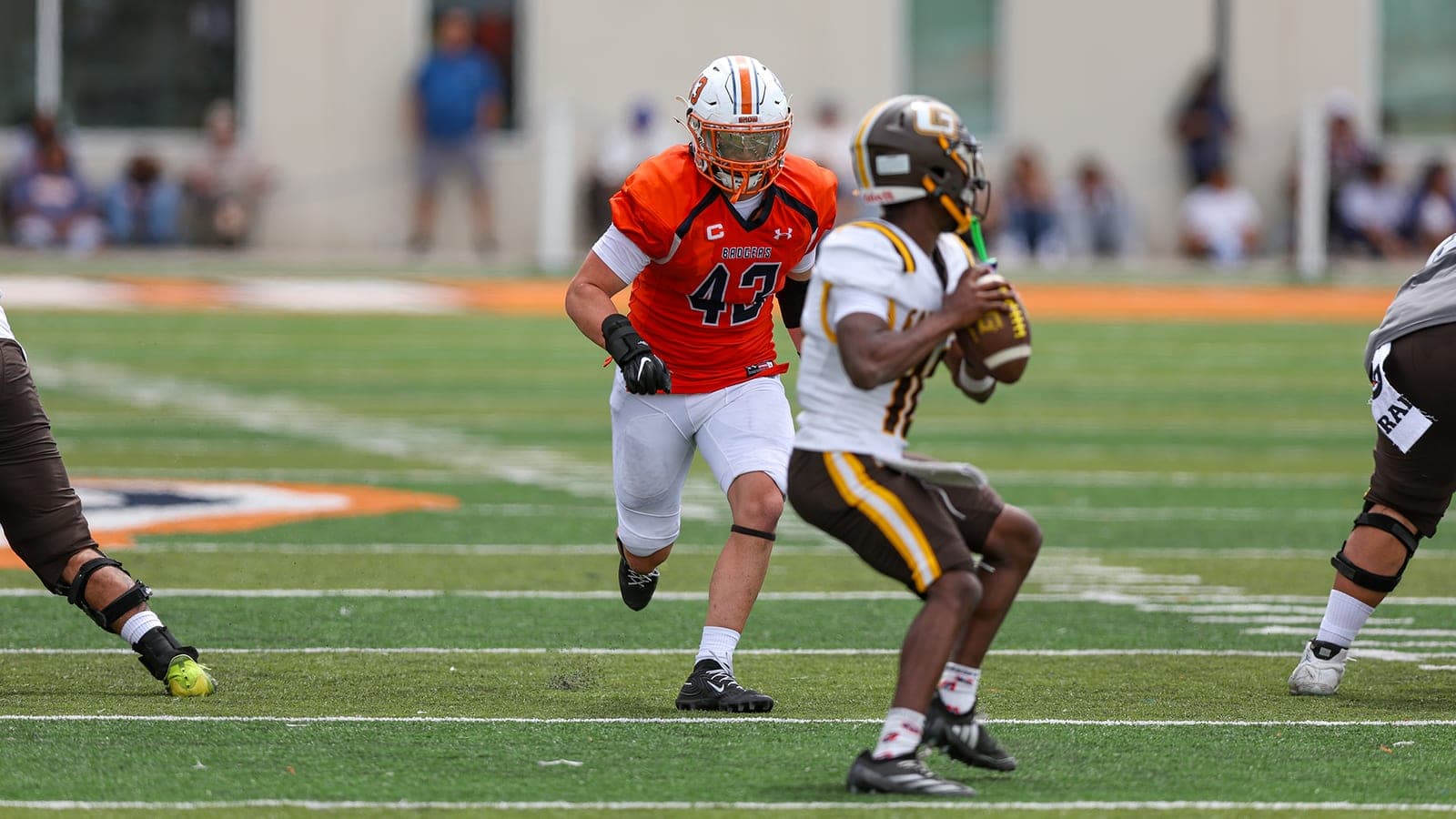
- A practical, honest guide for Utah high school athletes and families: highlight film, camps, ranking services, social media, NIL under UHSAA rules, and a realistic recruiting timeline.
- This story sits inside Utah's football lane and connects to the larger statewide sports picture.
- The story is backed by 7 sources and a visible last-verified date.
June 21, 2026
June 21, 2026
6 min / 1,355 words
7 official links
College recruiting rewards athletes coaches can actually find and evaluate. For Utah high school players, that means doing a handful of unglamorous things well — building film a coach will watch, getting in front of evaluators at camps, understanding how ranking services work, and keeping the eligibility paperwork clean. None of it requires hype or a big following. It requires showing up where college programs are already looking.
This guide is for Utah athletes and their families across every sport, with football as the running example because its recruiting calendar is the most documented. The rules below draw on NCAA and UHSAA policy, the NCAA Eligibility Center, and established recruiting-compliance resources — because recruiting advice is only useful if it is accurate.
For context on where Utah's talent is concentrated and how the in-state classes are shaping up, the Utah football recruiting hub and the top Utah high school football recruits board are the place to start.
Build highlight film a coach will actually watch
Your highlight video is the single most important asset you control. College coaches rarely watch a full reel, so the structure matters as much as the plays. Lead with your information — name, position, jersey number, graduation year, height, and contact details on the first slide — then grab attention in the first 30 seconds with your best plays. Hudl's recruiting guidance recommends opening with a top-plays section, then organizing clips by skill, with your strongest area first.
A few practical rules: use a spot shadow or arrow so a coach can find you immediately, but don't let the animation overwhelm the play. Show variety rather than the same play type repeated, and avoid heavy slow motion. Always keep a version with no music for upload. The more games, camps, and skills sessions you record, the more fresh film you can add as the season goes on — and you should re-order your best clips to the front as you improve.
Get in front of evaluators at camps and combines
Film gets you on the list; in-person evaluation gets you ranked and offered. Ranking services and college staffs both lean on camps, combines, and showcases to verify what the film suggests — size, speed, and how an athlete competes against real opponents. If you are attending an event, introduce yourself to the coaches you care about ahead of time, tell them you'll be there, and send your video a few weeks in advance so they know to watch you.
Camps are also where measurables get verified. Rivals, for example, builds its evaluations partly on verified size and athletic-testing data collected at events, not just self-reported numbers. That is why a camp performance can move a player up or down regardless of their film.
Understand how ranking services work
Recruiting rankings come from a small group of services — 247Sports, On3, Rivals, and ESPN — each with its own analysts and scale. They evaluate prospects on projected college and pro potential, combining film study, in-person camp and game evaluation, and verified measurables. 247Sports reserves five stars (a 98-110 rating) for roughly the top 32 players nationally, mirroring the 32 first-round NFL Draft picks; four stars go to prospects projected to eventually get drafted.
The figure most fans cite, the "247Sports Composite," is not any single service's ranking. It is an aggregate that blends the major services into one industry number, which is why a player can carry a four-star grade at one service and a three-star Composite grade at the same time. Two honest takeaways follow from this: first, you don't control your ranking — analysts do, off film and camps — so your job is to give them good evidence. Second, a ranking is a snapshot, not a verdict; plenty of lightly-rated players sign and contribute, and rankings say nothing about how a career turns out.
Use social media as a tool, not a stage
A clean, useful social presence helps coaches; a noisy one can hurt. The point is reach and credibility, not follower count. Pin your highlight film, list your graduation year, position, height, GPA, and a coach contact, and keep your feed something a college staff would be comfortable being associated with. Coaches do look, and a single post can cost an offer.
One Utah-specific note matters here: under UHSAA rules, what you post for any paid promotion is regulated. More on that below.
NIL awareness for Utah high school athletes
Name, image, and likeness rights for high schoolers vary by state, so verify Utah's stance rather than assuming the college rules apply. In January 2022, the UHSAA adopted an interpretation of its bylaws that allows Utah high school athletes to profit from their NIL — but under strict limits. Athletes cannot wear a school uniform or display school logos, insignia, or facilities in any advertisement, promotion, or endorsement; doing so is treated as a violation of the amateur rule. Deals must stay separated from school identity, and coaches and school employees cannot coordinate, broker, or use NIL as a recruiting inducement.
The practical version: a Utah high school athlete can do an endorsement, but it has to read as you the person, not you the school's player. When in doubt, ask your athletic director before signing anything — and never let an NIL conversation pull you away from the eligibility basics.
Work with your high school coach and family
Your high school coach is a credibility filter for college staffs — a quick call from a coach a college program trusts carries more weight than any post. Keep your coach in the loop on which programs you're talking to, and lean on them to make introductions. Families should own the logistics: tracking camp dates, transcripts, test scores, and the eligibility paperwork so the athlete can focus on playing.
The most important piece of that paperwork is the NCAA Eligibility Center. Any athlete planning to compete at a Division I or II school must register for an Academic and Athletics Certification account. That account — with payment or an approved fee waiver — is required before an official Division I visit, before signing an athletics aid agreement, and before competing at a DI or DII school. Note that the Eligibility Center will not finalize a certification until an NCAA school requests it, which is one more reason to start early and keep transcripts current.
A realistic recruiting timeline
Timelines differ by sport, but the framework is consistent. For most Division I sports, coaches can begin direct contact — calls, electronic messages, verbal offers — on June 15 after sophomore year or September 1 of junior year; football, basketball, and a few others have their own dated windows. There are no NCAA limits on you reaching out to coaches, only on when coaches may respond, so the underclass years are for building film, attending camps, and emailing programs. Division I official visits can begin August 1 before junior year.
Read backward from those dates: have real film and a registered Eligibility Center account before contact opens, not after. The athletes who get recruited are rarely the ones who started latest or posted the most — they are the ones evaluators could find, verify, and trust on time.
Key facts:
- Highlight film: lead with name, position, grad year, and contact info; hook in the first 30 seconds; show variety; keep a no-music version (Hudl)
- Camps/combines: where measurables get verified — Rivals uses verified size and athletic-testing data, not just self-reported numbers
- Ranking services: 247Sports, On3, Rivals, ESPN evaluate film + camps + measurables; the "247Sports Composite" blends services into one industry number
- Utah HS NIL: UHSAA allows NIL since January 2022, but bans school uniforms/logos/facilities in ads and severs coach/school involvement (amateur-rule violation otherwise)
- Eligibility: DI/DII athletes must register an NCAA Eligibility Center Academic and Athletics Certification account before official visits, aid agreements, or competing
- Contact timeline: most DI sports open coach contact June 15 after sophomore year or Sept. 1 of junior year; athletes may contact coaches anytime; DI official visits start Aug. 1 before junior year
- Sources: NCAA, NCAA Eligibility Center, UHSAA, Hudl, 247Sports, On3 (Rivals methodology)