- Utah State leaves the Mountain West on June 30, 2026 and joins a rebuilt eight-team Pac-12 the next day — the biggest change to the Aggies' national footprint in a generation.
- Bryson Barnes, Mason Falslev, Utah State Football, Utah State Men's Basketball connect back to Utah State University and the wider football picture.
- The story is backed by 4 sources and a visible last-verified date.
June 21, 2026
June 21, 2026
4 min / 867 words
4 official links
Utah State is changing conferences. On July 1, 2026 — a day after leaving the Mountain West — the Aggies join a rebuilt Pac-12, putting Logan inside one of college sports' most closely watched reconstruction projects. For the 2026 football season, Utah State will compete as a Pac-12 program for the first time in school history.
The Pac-12's board of directors voted unanimously to admit Utah State, and the school confirmed the move through both its athletics department and university communications. It is the kind of structural change that reshapes scheduling, travel, rivalries, and recruiting all at once.
What the new Pac-12 looks like
The 2026 Pac-12 is not the league that existed before the last round of realignment. After Oregon State and Washington State were left as the conference's only two continuing members, the Pac-12 rebuilt by adding programs from the Mountain West and beyond. For 2026, the football membership is set at eight: Oregon State, Washington State, Boise State, Colorado State, Fresno State, San Diego State, Texas State, and Utah State.
That makes Utah State one of five Mountain West programs — alongside Boise State, Colorado State, Fresno State, and San Diego State — moving into the rebuilt league, with Texas State arriving from the Sun Belt. The conference has announced that its 2026 football season will open on Saturday, September 5.
Why the timeline mattered
Utah State left the Mountain West on June 30, 2026, and the conference's bylaws gave the move a hard financial edge. By notifying the Mountain West of its departure by June 1, Utah State kept its exit fee at $18 million rather than seeing it double to $36 million. Those are the unglamorous mechanics behind a headline move, and they explain why the timeline mattered as much as the decision itself.
The programs that carry the move
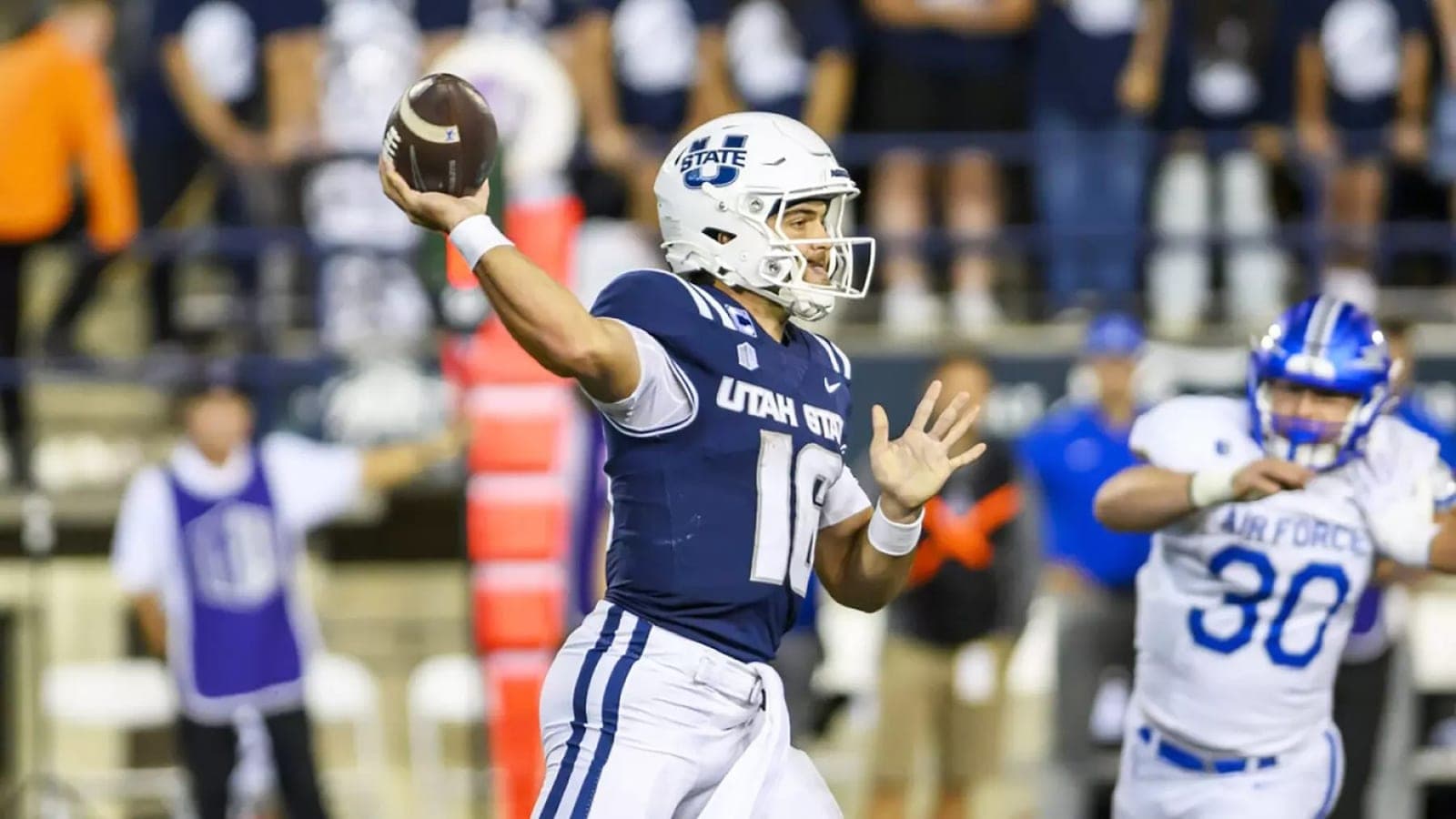
Utah State does not arrive in the Pac-12 as a blank slate. Utah State football, now led by head coach Bronco Mendenhall, gives the Aggies a Maverik Stadium program with recent national touchpoints — including Bryson Barnes, the Milford walk-on turned starting quarterback whose path already ties Utah State to the broader state map.
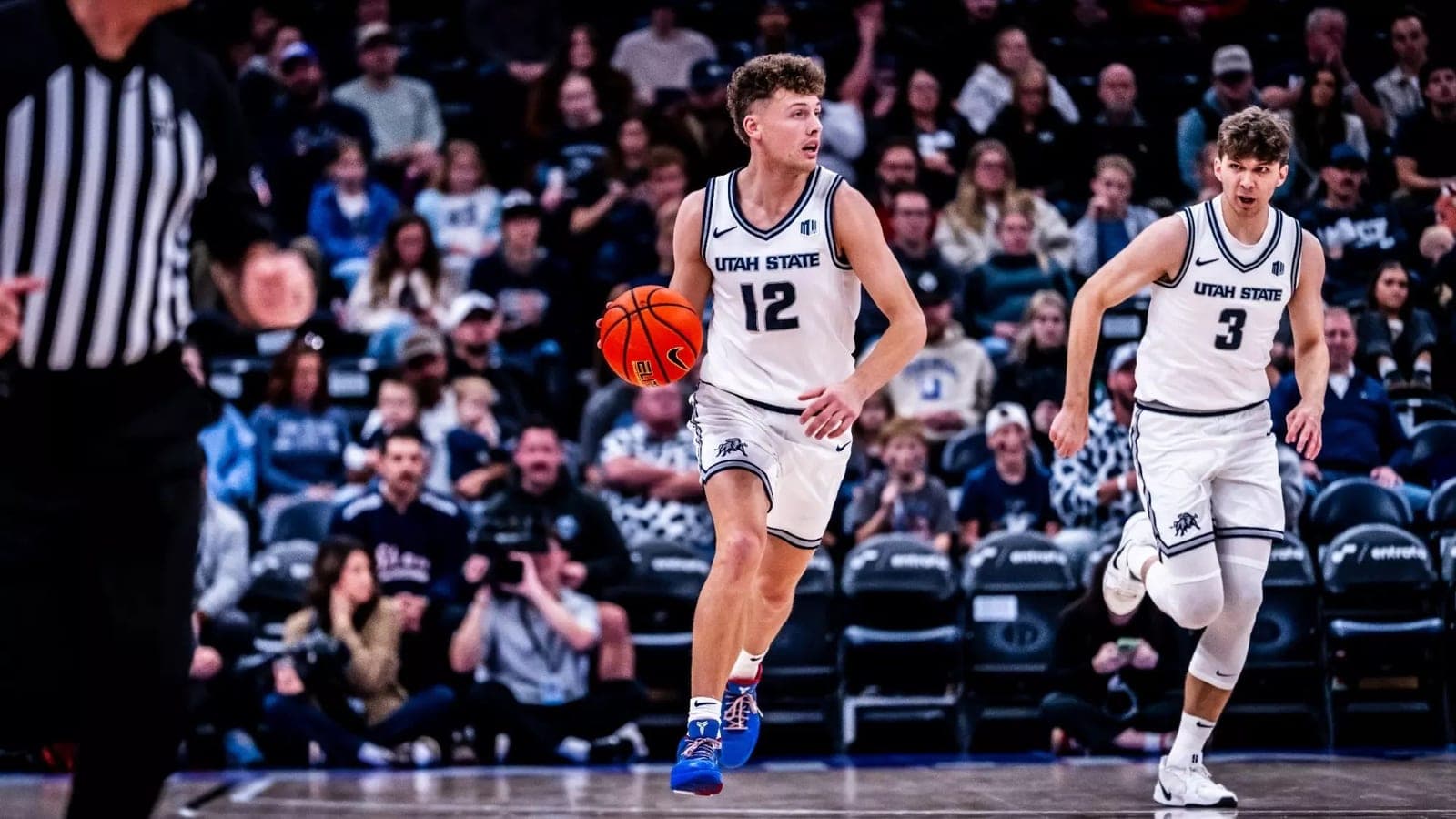
The bigger momentum may be on the hardwood. Utah State men's basketball went 29-7 in 2025-26, swept the Mountain West regular-season and tournament titles, and won an NCAA Tournament game over Villanova, with Mason Falslev named Mountain West Player of the Year. Carrying that form into a new league at the Dee Glen Smith Spectrum is exactly the kind of test the Pac-12 move is meant to create.
What changes for fans and recruits
For fans, the most visible change is the opponent list. Instead of the familiar Mountain West rotation, Utah State's schedule now runs through Pac-12 members spread across the West and into Texas. For recruits, the pitch shifts too: the Aggies can sell a Pac-12 affiliation and a conference actively rebuilding its television and competitive profile.
It also reshapes the state's college-sports map. With BYU and Utah in the Big 12 and the state's FCS programs realigning into the Big Sky, Utah State's Pac-12 membership gives Utah three distinct Division I conference homes at the top level. For the FCS side of that picture, see how all three Utah FCS programs are joining the Big Sky.
A rebuild, not a revival
The Pac-12 that Utah State joins is effectively a new league wearing an old name. When the conference's membership scattered in the last realignment wave, Oregon State and Washington State were left to hold the Pac-12 charter and rebuild it from the ground up. Pulling Boise State, Colorado State, Fresno State, San Diego State, and Utah State out of the Mountain West, then adding Texas State, gave the conference a functioning football footprint again. That context matters for how fans should read year one: Utah State is not joining the old Pac-12 of traditional West Coast powers, but a reconstruction betting that a compact, regional, competitive league can hold a place in the new college-sports economy. For the Aggies, the upside is a fresh national identity; the risk is that the rebuilt league is still proving itself at the same time they are.
What to watch in year one
The first season will set the tone. A September 5 conference opener, a basketball team coming off a tournament win, and a fan base that has watched realignment reshape everyone around it — all of it lands at once in 2026. Utah State spent the last decade as a Mountain West program. Starting this year, the Aggies are a Pac-12 story.
Key facts:
- Move: Utah State leaves the Mountain West on June 30, 2026 and joins the rebuilt Pac-12 on July 1, 2026
- 2026 Pac-12 football members (8): Oregon State, Washington State, Boise State, Colorado State, Fresno State, San Diego State, Texas State, Utah State
- Season opener: Pac-12 2026 football begins Saturday, September 5
- Exit terms: USU kept its Mountain West exit fee at $18M (vs. $36M) by notifying the conference by June 1
- Programs: USU football under Bronco Mendenhall (Maverik Stadium); USU men's basketball (29-7, 2026 Mountain West sweep, NCAA win) at the Spectrum
- Sources: Utah State University, Utah State Athletics, Pac-12 Conference, ESPN