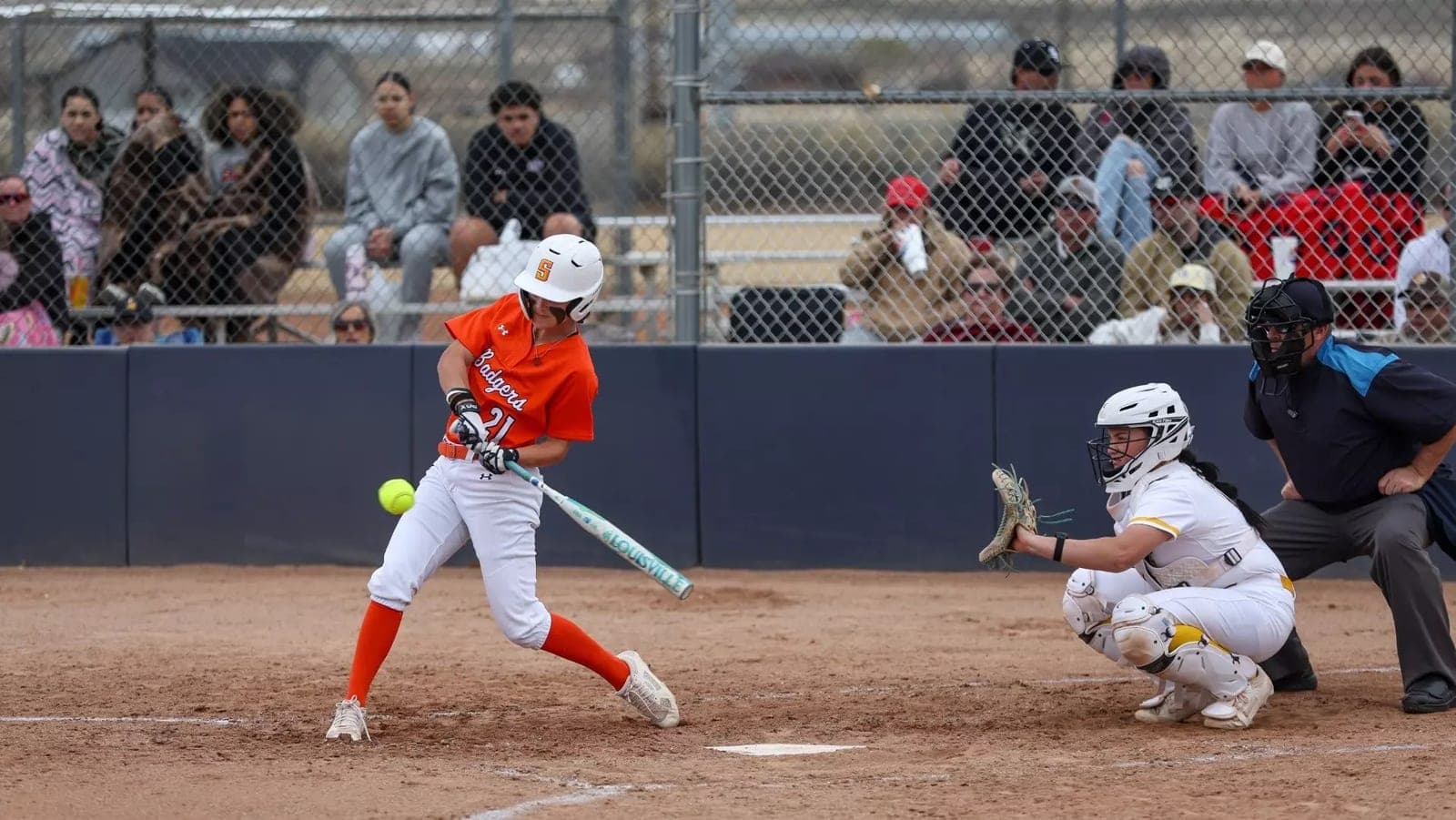
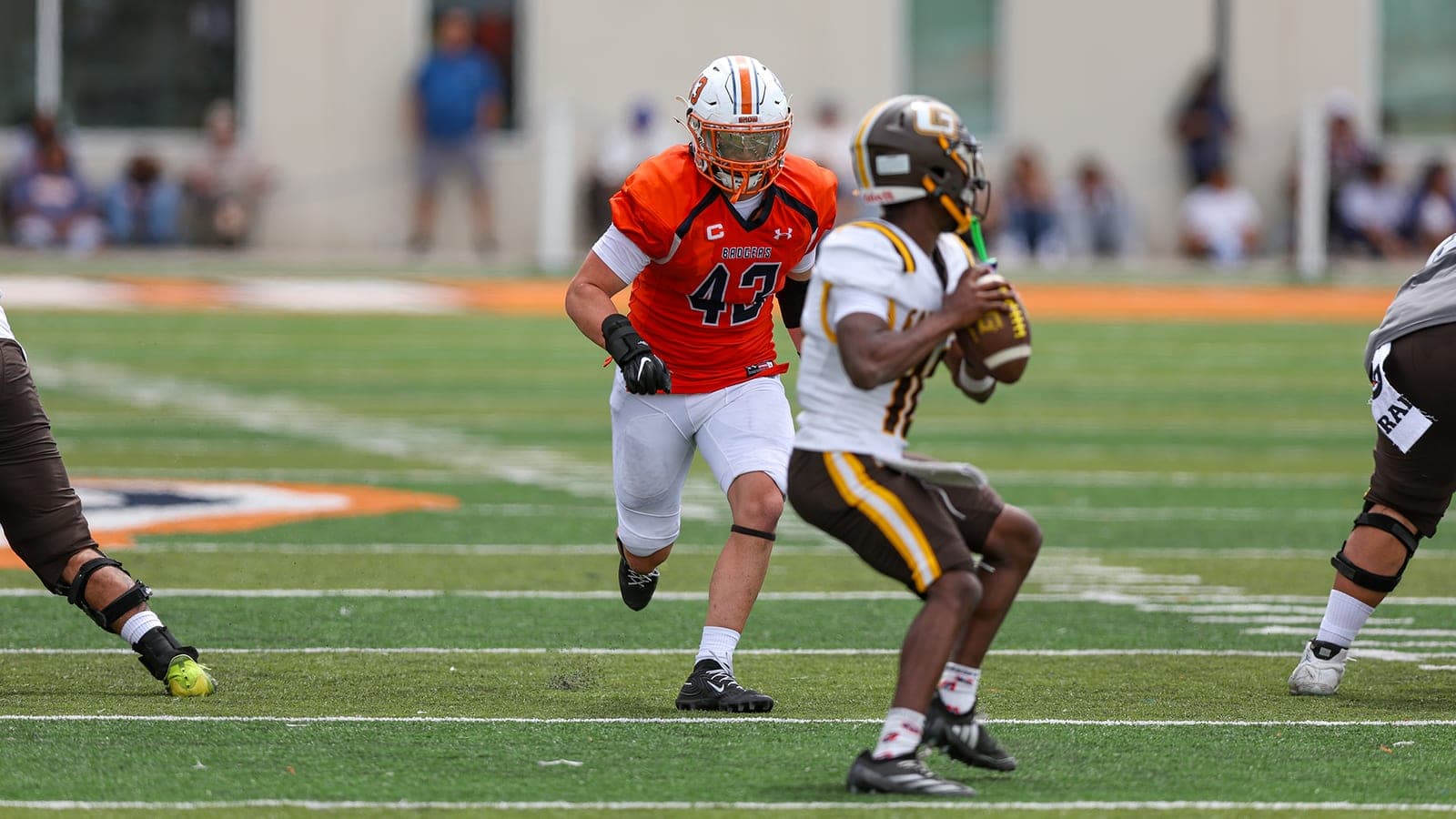
- A Utah high school football player who is not signed by a four-year program in February has two in-state routes that keep a season on the calendar: Snow College, the state's only junior-college football program, and a developmental league SUU attached its online courses to in April 2026. Here is what each one is, what the NCAA changed for two-year transfers in June 2026, and how to check a claim against an official source.
- Seth Rigtrup, Tayson Reid, Snow College Badgers Football connect back to Snow College and the wider football picture.
- The story is backed by 16 sources and a visible last-verified date.
October 9, 2026
October 9, 2026
7 min / 1,442 words
16 official links
Every February some Utah high school seniors finish football without a four-year scholarship. Most stop. The ones who keep going have fewer in-state choices than the state's eleven college athletics programs suggest, because only one Utah college sponsors junior-college football, and the newest route into the state is not a college team at all.
This guide explains the two paths on their own terms, with the official sources linked, and what the NCAA changed for two-year transfers on June 24, 2026. It is not advice about any individual's eligibility: that is decided by the school and the governing body, and the rules move every year.
Which Utah colleges play junior-college football?
One. Salt Lake Community College, Snow College and USU Eastern are the three Utah members of the NJCAA's Scenic West Athletic Conference, and their official programs lists show that SLCC fields ten teams and USU Eastern seven, neither of them football. Snow College's list of eleven includes it. A Utah player who wants a junior-college football season stays in Ephraim or leaves the state.
That makes Snow's conference move the most important change on this map. On Oct. 8, 2025, Snow announced that its football program would join the Southwest Junior College Football Conference, NJCAA Region 14, beginning in fall 2026. The Badgers had played as an NJCAA Division I independent since 2019, after the Western States Football League, which had run since 1985, ended with the 2018 season. Head coach Zac Erekson said in the announcement that joining the conference "eliminates that hurdle for our football program."
The conference Snow joined has eight members for 2026: Blinn, Cisco, Kilgore, Navarro, New Mexico Military Institute, Trinity Valley, Tyler Junior College and Snow. Each team plays every other member once, seven conference games, with the home-and-road split alternating by year. Snow opened its first SWJCFC season ranked No. 13 in the NJCAA preseason poll and won its conference debut 39-10 at Cisco on Sept. 5, 2026. Beehive's Snow College football page carries the dated results and the official schedule and roster links.
Who actually moves on from Snow College?
The honest measure of a junior-college route is where its players go next, and Snow publishes that every February. Its 2026 national signing class release, posted Feb. 4, 2026, listed 48 incoming signees, 39 of them from Utah, with 11 Utah all-state selections among them. The same release named 12 players from the previous season who had signed to keep playing, with UTSA, Utah, Southern Utah (two), Weber State (two), Tarleton State, South Dakota State, Central Michigan and South Alabama among the destinations, and one player who signed with a professional Australian rules football club.
Two Snow-to-four-year moves from that same 2025 season are documented on Beehive with the destination roster as the source. Seth Rigtrup, a Springville High product, carried 117 times for 668 yards and 10 touchdowns at Snow in 2025 and is listed on Weber State's 2026 roster. Tayson Reid, from Spanish Fork High, played eight games at Snow in 2025, was rated by 247Sports as a three-star junior-college prospect and the No. 4 linebacker in his signing class, and wears No. 54 on Utah's 2026 roster. The Utah JUCO pipeline hub keeps those pathways beside the current roster profiles and labels each one by what an official source confirms.
A signing-class list is not a promise. It shows that the route exists and how wide it was in one year. It does not say how many players on the same roster did not sign anywhere, and Snow's release does not either.
What did the NCAA change for two-year transfers in 2026?
The eligibility rules a junior-college player meets to transfer into NCAA Division I changed in June 2026, and the change cut in the player's favor. Division I Proposal 2026-40, titled "Academic Eligibility -- Two-Year College and 4-2-4 Transfer Requirements," was adopted by the Division I Cabinet as expedited legislation on June 24, 2026, with an immediate effective date for two-year and 4-2-4 transfers seeking eligibility in 2026-27 and after.
The proposal's rationale states that it "reduces the transferable grade-point-average requirement from 2.500 to 2.000" and removes certain credit-hour thresholds, including the 12-hour average and the 48- or 72-hour requirement for nonqualifiers. It keeps the limits on physical-education activity credit, the core-coursework requirements and the progress-toward-degree rules. The NCAA's stated reason for making it immediate was so that current student-athletes, "particularly those serving a year of residence," could benefit without delay.
What that means in practice is narrower than it sounds. The GPA floor a Snow player needs on transferable work to be eligible at a Division I school is now 2.000, and the credit-hour arithmetic is simpler. It does not change who recruits a player, and it does not change NJCAA eligibility to play at Snow in the first place, which the NJCAA sets separately and the school's compliance staff applies. Both links are in the sources below.
What is the NJCP route SUU joined?
The second path is newer and different in kind. The National Junior College Prep Football League describes itself as a nationwide developmental organization for high school graduates, transfer-portal athletes and overlooked players, offering coaching, mentorship and exposure to college programs. It is a league, not a college.
On April 15, 2026, Southern Utah University announced a collaboration with the league. Under it, NJCP players get access to SUU's online undergraduate programs and can enroll in accredited SUU courses while competing, with the stated aim of keeping NCAA eligibility and academic progress intact. SUU's release lists four parts: academic support built around athletes' schedules, transfer pathways with advisors, eligibility tracking and access to SUU's career and educational resources. Lynn Kvamme, director of recruitment and partnerships at SUU Online, said the university was "excited to partner with NJCP to give student-athletes the chance to continue their education." Shawn Jones, the league's commissioner and an SUU graduate from the class of 1998, put the goal as "zero academic casualties."
Three things the release does not say matter as much as what it does. It names no cost to the player, no number of teams, and no Utah team. A family weighing this route is weighing an academic arrangement with SUU Online attached to a league whose football side has to be checked directly with the league. That is a legitimate path to research. It is not a junior college, and it should not be compared to Snow as if it were one.
How to compare the routes without guessing
- Confirm the football first. Snow's season, roster and coaching staff are on its official athletics site, and Beehive's team page links them. For the NJCP, ask the league which teams exist, where they play and what a player pays, because its Utah partner's release does not publish any of that.
- Use the official questionnaire, not a recruiting service. Snow publishes a prospective student-athlete questionnaire on its athletics site. It is an athletics form, not an admissions application; apply to the college through admissions separately.
- Separate eligibility to play from eligibility to transfer. Playing at Snow runs under NJCAA rules. Transferring to a Division I program after Snow runs under the NCAA bylaws that Proposal 2026-40 just changed. The school's compliance office is the only source that can apply either one to a specific transcript.
- Read a pathway as one case, not a formula. Rigtrup and Reid are two sourced examples from one season's departures. The same signing-class release names a dozen players who moved on and says nothing about the rest.
Key facts:
- Snow College is the only Utah junior college that sponsors football; SLCC and USU Eastern do not list it among their programs.
- Snow joined the Southwest Junior College Football Conference (NJCAA Region 14) for fall 2026, an eight-team league with seven conference games each, after seven seasons as an NJCAA independent; it opened 39-10 at Cisco on Sept. 5, 2026.
- Snow's Feb. 4, 2026 signing class: 48 signees, 39 from Utah, 11 Utah all-state picks; 12 returning players signed to keep playing, including at Utah, Weber State (two) and Southern Utah (two).
- Documented Snow pathways on Beehive: Seth Rigtrup to Weber State (2026) and Tayson Reid to Utah (2026), each sourced to the destination roster.
- NCAA Division I Proposal 2026-40, adopted June 24, 2026 and effective immediately, cut the transferable GPA requirement for two-year transfers from 2.500 to 2.000 and removed the 12-hour average and the 48/72-hour nonqualifier thresholds.
- SUU's April 15, 2026 collaboration with the National Junior College Prep Football League gives NJCP players access to SUU Online courses, advisors and eligibility tracking; the release publishes no cost, team count or Utah team.