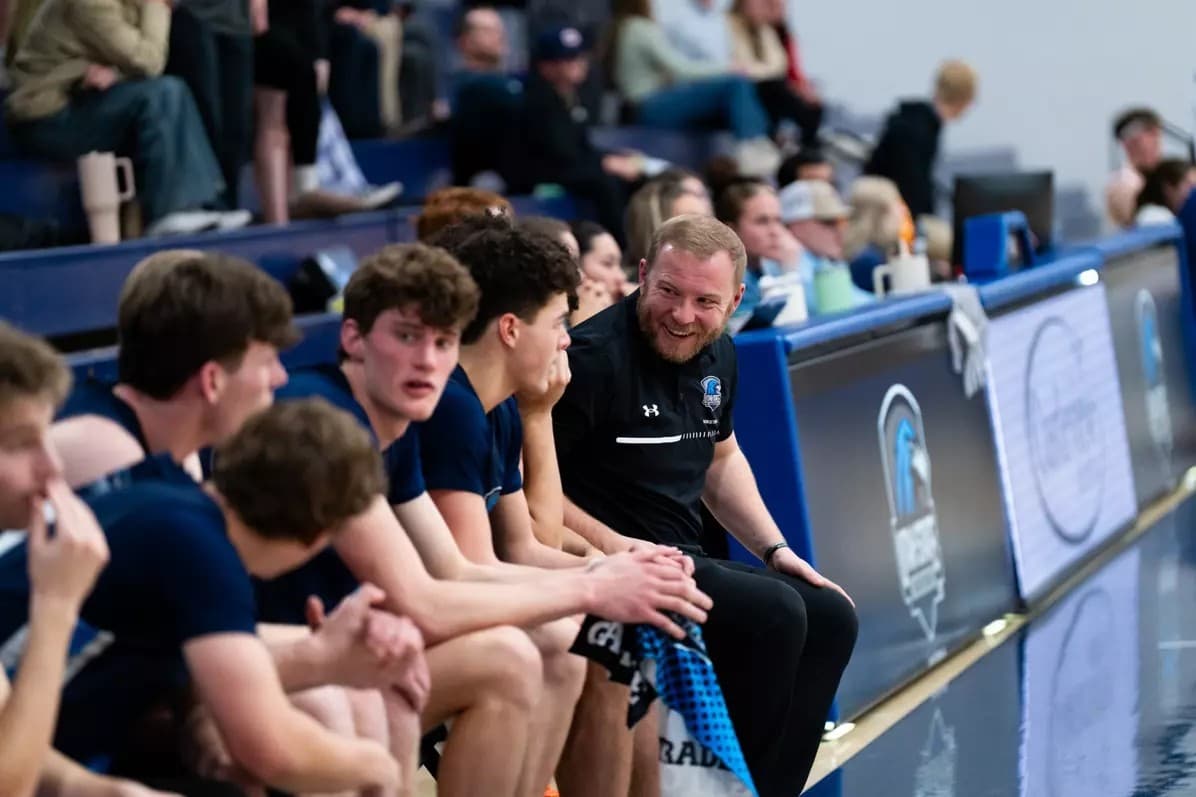
- A directory of the named counselling and wellness service at all eleven Utah schools we cover, the statewide crisis numbers worth memorising, and what actually happens when an athlete asks for help.
- This story sits inside Utah's basketball lane and connects to the larger statewide sports picture.
- The story is backed by 14 sources and a visible last-verified date.
September 18, 2026
September 18, 2026
5 min / 1,193 words
14 official links
If you need help right now: call or text 988 for the Suicide and Crisis Lifeline, text START to 741741 for the Crisis Text Line, or use the free SafeUT app, which is staffed around the clock by licensed counsellors at the Huntsman Mental Health Institute and is open to college students, not only to those in K-12. The Huntsman Mental Health Institute crisis line, 801-587-3000, is the after-hours number that the University of Utah, Utah State and Westminster all point their own students toward.
Everything below is about the ordinary weeks as well as the worst ones.
Every Utah campus has a service. Most athletes cannot name it.
The gap in college-athlete mental health is rarely that nothing exists. It is that the thing which exists is invisible at the moment it is needed. An athlete at 10pm the night before a conference opener is not going to find the right office by searching a university website for the first time.
So here is the list. Every school Beehive Athletes covers has a named service, and at eight of the eleven it costs a student nothing.
| School | Service | Cost to students | | --- | --- | --- | | BYU | Counseling and Psychological Services | Covered for enrolled students | | University of Utah | University Counseling Center | Fee schedule published by the centre | | Utah State | Counseling and Psychological Services | Free except diagnostic evaluations | | USU Eastern | Served by USU CAPS, which covers Logan and all statewide campuses | Free except diagnostic evaluations | | Weber State | Counseling and Psychological Services Center | Free | | Utah Valley | Mental Health Services, Student Health Services | Same price with or without insurance | | Southern Utah | Counseling and Psychological Services | Free | | Utah Tech | Booth Wellness Center | Free | | Salt Lake Community College | Center for Health and Counseling | Low per-session fee, with hardship waivers | | Snow College | Counseling and Wellness Center | Contact the centre | | Westminster | Mental Health Services | Free, no insurance required |
We have deliberately linked each service rather than printing its phone number. Campus numbers change, and the page each link points to always carries the current one. The crisis numbers at the top of this article are the ones worth memorising.
Four of these schools also run TimelyCare, a virtual service that operates 24 hours a day including during breaks and campus closures, when counselling offices are shut: Utah Valley, Southern Utah, Snow College and Westminster all list it. For an athlete whose season runs straight through the holidays, that distinction matters more than it looks.
What these services actually do, beyond talking
The word counselling puts people off because it sounds like one thing. It is not.
BYU's service lists group therapy, stress management and biofeedback — training that shows you your own heart rate and breathing in real time so you can learn to bring them down deliberately. Southern Utah lists biofeedback too. The University of Utah runs single-session appointments and skills workshops, which exist precisely for students who do not want to commit to a course of therapy. Utah State offers same-day or next-day crisis appointments for students who report high safety risk or recent trauma. Salt Lake Community College and Utah Valley both provide psychiatric evaluation and medication management.
That range is the point. An athlete who wants to sleep better before away games, an athlete who cannot stop replaying a mistake, and an athlete in genuine crisis are not asking for the same thing, and the campus service is set up to tell them apart.
Staying steady under pressure
The skills that hold up in the last five minutes of a tied match are, unromantically, the ones practised when nothing is at stake.
Train the breath, not just the body. The reason biofeedback appears on two Utah campuses' service lists is that slowing the breath is one of the few levers an athlete can pull on their own nervous system mid-competition. It is a physical skill and it rewards repetition.
Have a routine that survives a bad start. A pre-serve or pre-kick routine is not superstition. It is a fixed sequence that gives attention somewhere to go when the scoreboard is trying to take it.
Separate the mistake from the next ball. The rally after the error is the one you can still win.
Treat sleep as training. It is the input most often cut first in a heavy week and the one that most reliably degrades everything else.
Decide in advance who you would tell. Naming one person while you are calm is far easier than identifying one while you are not.
What actually happens when you ask
The most common reason athletes give for not going is not knowing what they are walking into.
In practice, a first contact at a campus counselling centre is an intake conversation: what is going on, how long it has been going on, what you want to be different. From there the service either books you with someone there, points you to a group or workshop, or refers you out. Utah Tech describes exactly this — an intake appointment where a counsellor identifies needs and then refers either internally or to an outside provider.
It is confidential. It is not an academic record, it is not a conversation with your coach, and at most Utah schools it does not cost you anything. Asking does not commit you to anything beyond the first conversation.
Why this arm exists
Beehive Athletes covers athletes across eleven Utah schools, from Division I flagships to junior-college programmes. The pressures are not identical at every level — scholarship stakes here, transfer timelines there, a two-year clock somewhere else — but access to help should not depend on knowing where to look.
The NCAA's own well-being research found that most athletes believe their coaches care about their mental health, while only about half of men and roughly a third of women feel comfortable raising it with them. That gap is not closed by more data. It is closed by making the next step concrete, which is what this page is for.
Key facts:
- Crisis numbers: 988 Suicide and Crisis Lifeline; Crisis Text Line, text START to 741741; SafeUT app; Huntsman Mental Health Institute crisis line 801-587-3000
- SafeUT: free, staffed 24/7 by licensed counsellors at the Huntsman Mental Health Institute, and open to higher-education students
- Coverage: all eleven Utah schools in this directory have a named counselling or wellness service
- Cost: free or fully covered for students at eight of the eleven; SLCC charges a low per-session fee with hardship waivers
- 24/7 virtual care: TimelyCare is listed by Utah Valley, Southern Utah, Snow College and Westminster
- Same-day crisis appointments: Utah State CAPS, for students reporting high safety risk or recent trauma
- Biofeedback offered: BYU and Southern Utah
- USU Eastern: covered by Utah State CAPS, which serves Logan and all statewide campuses
- Not medical advice: this is a signposting guide to publicly listed services, not clinical guidance